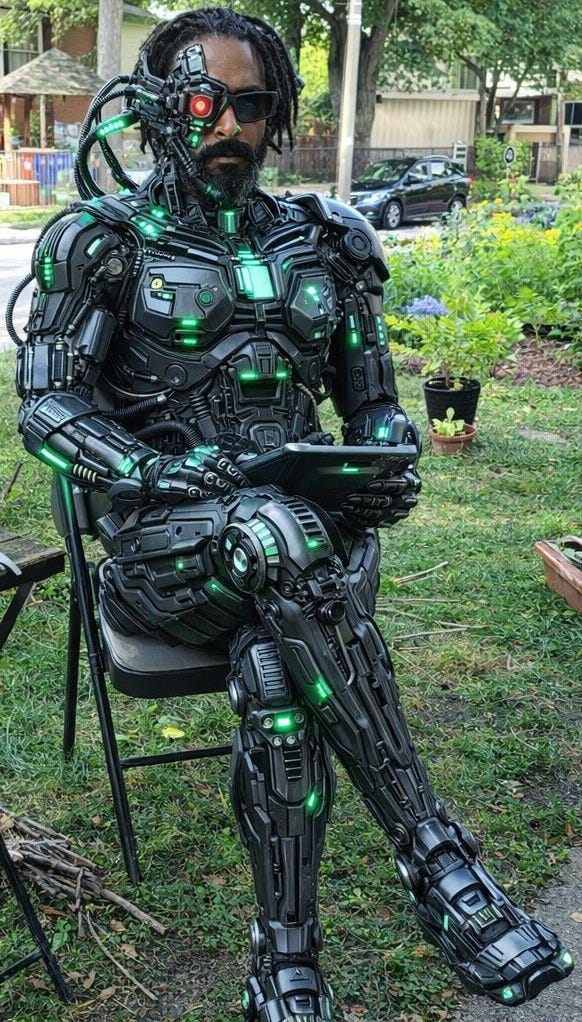
I have struggled trying to define a 21st-century writer. The model of my former heroes of the last century—Hemingway, Maugham, and Greene—who hung out in remote corners of the world, drank, caroused, and jettisoned periodic manuscripts, hammered out on battered typewriters, that became bestsellers, and who were never around to promote their work – that model did not exist anymore. In an essay titled “Fragmentism,” which I wrote five years ago, I defined the writer of this century as “being multi-skilled in writing, editing, designing, producing audio and video, performing their work, and shamelessly promoting themselves.” Why? Because long forms of literature like novels and short stories (yes, even short stories) were becoming cumbersome for modern readers to digest, after having their attention spans short-circuited by smartphone apps. Therefore, it was necessary to distill the messages within these longer literary forms into shorter, more digestible ones like blogs, vlogs, posts, podcasts, TikToks, tweets, and threads. But how could the writer be skilled in all these formats, let alone have the time to do so?
And then AI arrived. One writer produced 200 AI-generated novels under 21 pen names in 2025 and made a six-figure income – she claimed it took her 45 minutes to write a novel! In some Amazon sub-genres, a majority of new titles are now AI-generated. Amazon had already placed a three-novels-per-day limit on uploads to its KDP platform in 2023 – prescient! The fear and uproar among human writers about AI-generated literature was understandable: they had spent years mastering a profession that never attains perfection; studying pacing, character, narrative, dialogue, plot, and language, only to see a machine formularize and flatten their life’s work, dilute its reputation, and destroy their ability to make a living from it. I am not a fan of “AI-Generated” either. Writing is our raison d’être. What’s the fun in outsourcing it to a robot?
Between these two challenges, I tried to find a middle way forward. Therefore, after much thought and experimentation, I am going to propose the following as a strategy that may help us writers to continue to develop our craft, fit into the present multi-task, multi-skill environment, and use AI as an ally instead of an enemy. What I cannot guarantee is that we will make more money at it than we did before (if we ever did!) – even that writer of the 200 AI-generated novels is generating less revenue in book sales than in the $80–$250-a-month coaching business she now runs, teaching others to do the same.
I am proposing that we enlist AI to repurpose our primary material, be that a novel or short story, into these shorter forms that are palatable today, so that they could be distributed more widely, with less time and upskilling required of us. AI-Assistance instead of AI-Generation. In so doing, we avoid the “low quality” trap, because the primary material is still the human author’s and they have the final say on the finished, repurposed product going out to the public. The trick is not to reinvent the wheel for each platform but to reshape it — with consistency in tone, themes, and visual style becoming as important as creativity itself. Repurposing does not touch the sentence-level craft we built our reputations on.
Here is a list of activities AI can perform for you (this is not a comprehensive list because writers are finding newer ways to use AI daily):
- Generating dozens of social post ideas per chapter (quotes, discussion questions, behind-the-scenes facts).
- Extracting a handful of SEO-optimized blog posts from a manuscript targeting long-tail keywords.
- Drafting video scripts for character deep-dives or scene breakdowns.
- Manuscript-to-marketing assets (blurbs, ad copy, press releases, and social-post drafts) and manuscript-to-content repurposing (newsletters, query letters, and series bibles).
- Drafting video scripts for character deep-dives or scene breakdowns.
- Help authors personalize the kinds of emails subscribers like to receive (although the e-mail channel may be a negative these days given the number of bad actors who have got into the e-mail solicitation game, posing as publishers, agents, publicists, and book clubs).
- Recognize upcoming trends and predict reader interests, helping authors place their books where a readership is predicted to grow.
- Using the AI tool as an idea generator.
- Using the AI tool as a 24/7 research assistant.
- Using the AI tool as a 24/7 writing coach to critique early drafts and get you past writer’s block.
- Using the AI tool as a 24/7 editor. I did this with one of my own books recently when my human editor backed out on me, begging illness, when I was four months shy of a publishing deadline. AI stepped into the breach, immune to any illness, barring a power outage, and delivered valiantly.
(Note: I have used 24/7 for the last three bullets because authors find inspiration at all times of the day or night, and finding those who are available 24/7 in the three above-named disciplines is impossible, and would probably cost an arm and a leg even if they were around).
One industry guide (although I would take them with a pinch of salt, as they sell these services), claims that authors implementing AI-repurposed marketing see 40-60% higher launch velocity and two to three times better long-term sales compared to traditional methods. I will also caveat that this AI-repurposing is more advantageous to self-published and indie authors, even mid-listers, who do not have a lot of assistance. It is unlikely that a Big 5 author will bother with these activities unless their pipeline of marketing funds and staffing resources suddenly dries up or is reassigned to the next bestseller and star author. However, there are Big 5 publishers appearing in YouTube videos today, advocating for their authors to use AI as an assistant in some or all of the above-listed tasks.
I pause here to recognize one of the hidden costs of AI, whether used for generation or assistance. And that is its huge consumption of electricity, water, and compute power. Large data centres guzzle these resources and those costs are never directly attributed proportionately to users, especially power users, but rather dispersed across the general taxpayer base. But this is not only true of AI – for example, we haven’t cracked the code of true cost allocation to truckers who use and abuse our highways. My AI assistant pulled a couple of examples here: “a Consumer Reports piece describes a Virginia homeowner shocked by a $281 electricity bill in January 2026, a huge spike from the roughly $100 he’d paid the previous month, and Baltimore bills jumped over $17 a month after a record power auction.”
The water side is smaller in per-use terms than people assume but is concentrated geographically: generating a single 100-word AI response can consume roughly 519ml, about a standard bottle of water, but a fair read of the debate is that cooling competes directly with drinking water since many facilities use potable fresh water, and usage is rising fast with company disclosures up double digits year over year.
Some course corrections are afoot: Microsoft has committed publicly to paying its own electricity costs rather than passing them to ratepayers; the newer SLM (small language model) which can be downloaded to users’ laptops will reduce the demand for LLMs and hence large data centres – however, this will not reduce consumption; in my mind, it will just redistribute it more widely. Whichever way we look at it, true cost allocation is still an open item, but the writers who adapt early will be the ones who’ve already built and benefited from the workflow habits by the time the true price hits.
And what happens when the inevitable AI investment bubble bursts? Will the AI-invested writer be left stranded? I am willing to take a punt and say that while the companies investing in AI may fail, the technology itself will survive and evolve under other custodians. It happened when the dot-com bubble imploded – its technology spawned the Googles, Amazons and E-Bays in the Internet II era.
I do not think I will make any friends in the Ultra Traditionalist splinter camp that has its blinders on and says “All AI is bad. Down with AI!” However, I would like to recognize the reasonable ones who are still Traditional and saw, as I did initially, the advent of AI as an assault on our identity and legitimacy. Resistance will dissipate as the technology becomes ubiquitous. Resistance to the typewriter and PC too faded when those new tools, at the time, became ambient infrastructure rather than a novelty. Furthermore, typewriters and PCs only sped up the same task of getting words onto a page. AI-assisted repurposing not only helps you write faster, but it also lets you occupy formats you never learned.
Yet, I feel for the Traditionalists who have given their lives to this impossible craft. In a Cambridge University survey, more than half of published novelists said they believed AI would entirely replace their work as fiction writers, and some, like romance novelist Marie Force, object specifically to the difficulty AI-generated volume creates for newer authors trying to be discovered amid a flooded market. That’s not luddism — it’s a labour-market and gatekeeping concern.
The above-mentioned fears and prognostications notwithstanding, I have to conclude that the 21st century writer will be able to tackle the fragmenting literary landscape head-on with AI assistance, while the resistor will be left complaining and face obsolescence. The AI-enabled writer will be equipped to be multi-skilled and versatile compared to their 20th century counterpart refusing to adapt.
And as proof that I am putting my money where my mouth is, I wrote this article with the help of my AI assistant, who did the research and critiqued my first draft and argument. In terms of speed, when I was approached by the editor of a Substack column in July to write this piece, my traditionalist reaction was to say, “How about by the end of September, because I am going away on vacation next week?” On reflection, I thought, No. Let me practice what I preach. I enlisted Claude AI to do the background heavy lifting, and here I was a day later with a fully written article. I still contributed the ideas, the voice, the final edit, and infused the piece with my syntactical idiosyncrasies. I have also advised the editor to publish this asap, as with the speed AI is marching, this piece might fall into the “historical non-fiction” category come September.